Monday, June 4, 2012

Tui Gallery

We were planning something a bit more adventurous for the bank holiday, but I was feeling a little under the weather so we decided instead just to go for a walk in the Botanic Gardens and see if we could spot (and hopefully photograph) some tuis. My attempts at tui photography in the past using the DMC-LS60 had not been an untrammelled success, so I thought I'd have a go with the new equipment.

We wandered around the park seeing the inevitable blackbirds and chaffinches:

A chaffinch (not a blackbird)

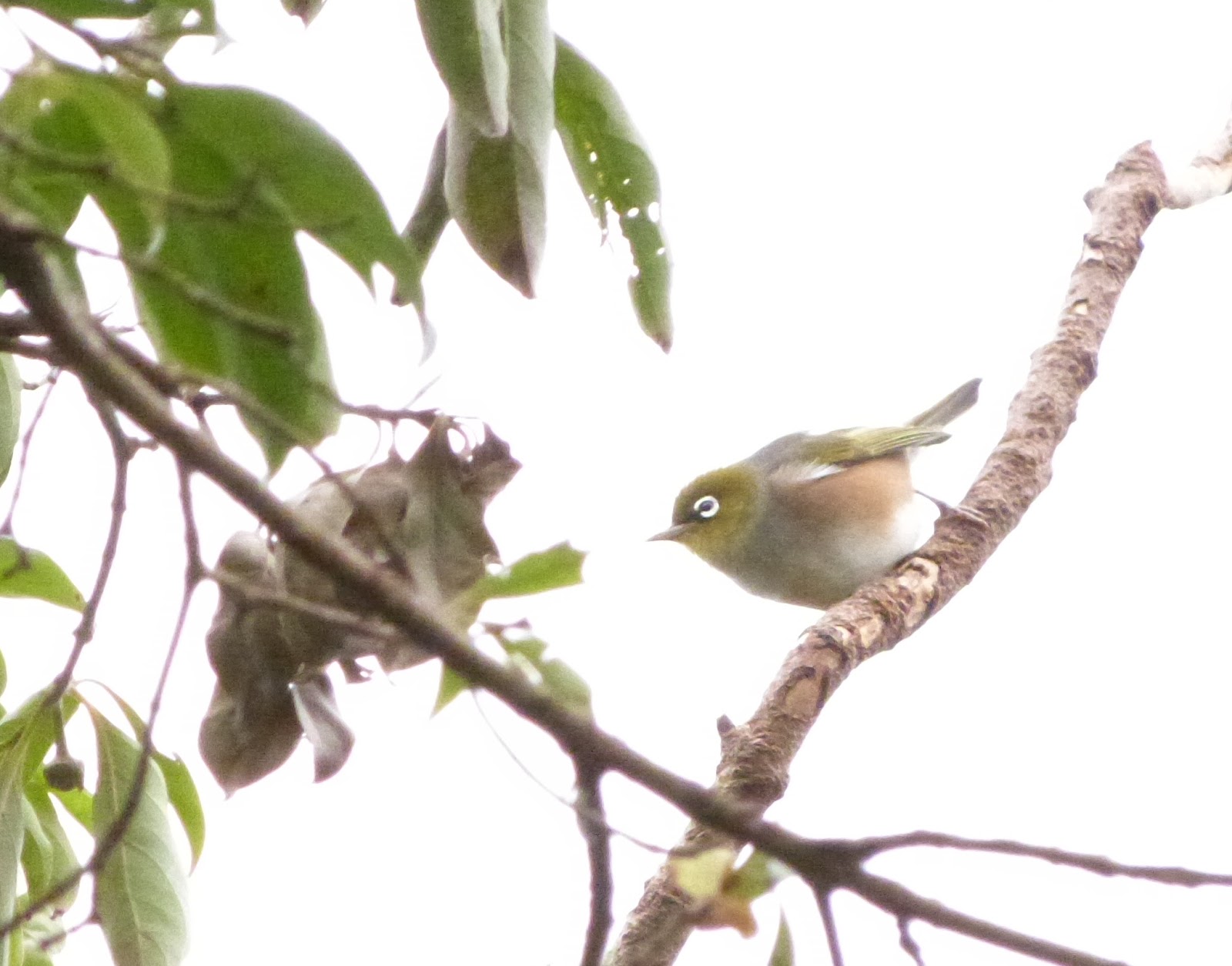
And we were just admiring some white-eyes when a tui came and landed on a branch right next to us. Naturally, he tried to get as much of the branch as possible between me and a good shot. The tuis in the Botanic Gardens are quite used to people, and didn't seem bothered as I tried to get a better angle.


Zealandia By Night

When we became members of Zealandia back in March of this year, one of the offers to new members was a free night tour. Zealandia run night tours daily - in fact they're more of an early-evening tour than night tour, as they start off in the daylight - so we booked a slot for Saturday night.

We turned up and joined our tour group. There were nine of us with one guide. First up, we went into the Visitor Centre, and watched some of the films and had a brief talk about the history of New Zealand...most of which we knew already, but always interesting to have a refresher. Then we set out into the park, just as dusk was coming on, and the last of the daytime visitors were hurrying home.

The main purpose of the night-time tour is to see kiwis. Being nocturnal, this is the only way to see them in a natural habitat - we had seen a couple last year in the aquarium at Napier, but it's not the same as seeing them in the wild.

Zealandia is a sanctuary for little spotted kiwis - a species that almost became extinct, but has since recovered with the help of Zealandia and other breeding programmes, to around 1,400 birds today. They are keenly studied by geneticists as the gene pool from which all remaining individuals are breed was so small.  Fortunately, our guide knew where to take us, as there was one particular individual who had made a habit of rising early and foraging on another kiwi's territory (kiwis are very territorial) before being chased off. We turned up there and were rewarded with the sight of this kiwi, happily rootling about in the undergrowth and not paying the blindest bit of notice to us. He was illuminated by our guide's red torch, red light being invisible to kiwis and a lot of other nocturnal fauna. We'd been similarly equipped with red torches of our own. I tried to take some pictures but obviously flash photography is a big no-no, and the red light wasn't strong enough to show anything.

We then toured around the rest of the park in the hope of spotting some more later-rising individuals, but with no luck. We came to the frog enclosure and saw a Maud Island frog, one of New Zealand's rare and unique amphibians - unlike other frogs around the world, they have no pouch and so cannot croak. They keep a few of them in a cage so that visitors are guaranteed to see some, but the majority of the frogs are free to roam around the park - and, presumably, take their chances with the rest of the local wildlife!

As we walked back, we hoped for a sight of another kiwi, and searched the undergrowth as much as we could with our torches, but it wasn't to be. Our guide told us that they generally have a success rate of around 75% of seeing kiwi, but occasionally you get lucky and can see half a dozen in one night. That wasn't us, though...maybe when we return another time.

As I've got no photos of a kiwi to show, here's a spider that we found on our deck on Sunday morning:


Saturday, May 26, 2012

Photography

So, I got this new camera, like...

Up till now, I've been taking pictures using the automatic settings on the camera. But it's got all these other fancy-schmancy settings and button and wheels and levers and whatnot, and I don't know what they're for and how they work. So I booked myself onto a photography course, and learnt all about F stops and ISO and shutter speeds and what-have-you.

Of course, I promptly forgot the lot, but fortunately there's a website where I can remind myself of what it all was. Anyway, the upshot of all this is that I now use my camera on the M (for "manual") setting, and adjust the other settings myself according to the conditions. So goes the theory...today we went out and took it for a first test run. It was a cloudy day, so not the ideal bright sunshine which has probably been the cause of my good photography so far. We went up to Zealandia once again, and photographed some of the bird life there:

Fantails are notoriously hard to photograph

Pied cormorant
 There are problems trying to photograph from the gloomy ground up towards the sky...
A white-eye


The kakas do stay still enough to get some good shots...

A kaka
 I got loads of out-of-focus pictures of bellbirds and saddlebacks, but these two seem to have come out quite well:
A bellbird


A takahe - one of two resident at Zealandia. Beautiful plumage!

A black cormorant

A grumpy cormorant
So I shall continue to work on using the different settings and hopefully get better at predicting what to use for different light conditions.

Sunday, May 20, 2012

Point Dorset

It was another cracking autumn day in Wellington, so we decided to go for a walk around Point Dorset, on the Eastern side of the Miramar peninsula. We spotted some surfers in Breaker Bay as we set out, but they were just waiting for the big waves to come in, so we didn't manage to get any action shots of them.

Climbing to the peak from the entrance at the Pass of Branda, we came across the site of the Oruaiti Pa marked by a pou whenua:


A kingfisher flew past and landed on a stalk:


A man paddled past (far below) on his paddle-board:


The kingfisher kept following us:


Back down to beach level, and the waves were attempting to be spectacular, but not very successfully:


As we walked back along the street to the car, the kingfisher turned up again:


Monday, April 9, 2012

Walkies

We had originally planned to break our (OK, my) South Island duck at Easter, but for one reason or another, we didn’t get round to trying to book anything until quite late. When we did finally get around to looking at prices of the Interislander for Easter, all the deals had gone and they only had expensive tickets left. So we put that idea on hold for a while, and decided to stay in Wellington for the Easter break.

Last Monday, the weather forecast for the weekend was rubbish – rain, wind, and general bad weather was in prospect. This being New Zealand, of course, this meant nothing, and as the weekend approached the forecasts gradually improved, so instead of the weekend of indoor pursuits – cinema, museum etc. – we were able to get out and about as each day dawned brighter than the last.

On Friday, we explored Moa Point, which is just down the road and round the corner from where we live. There’s a nice walk there called the Eastern Walkway which we did in about 2 hours, including a visit to the Ataturk Memorial, which was erected in 1990 to commemorate the friendship between Turkey and New Zealand. The site was chosen because of its resemblance to Anzac Cove in Turkey, where the Gallipoli landings took place on 25th April 1915. There is a similar memorial in Mornington Peninsula, Victoria.

Ataturk Memorial


On Sunday we drove round to Wairarapa and down to the coast at Putangirua, where there is a walkway up to the Pinnacles – rock formations caused by erosion into giant columns. This location was used during the filming of The Return Of The King because of its spectacular scenery. The walk is about an hour uphill (with stopping time) as we followed the river bed upstream, but was much quicker coming back. It was quite warm and we wished we’d decided to wear shorts. Damn you, MetService!


Afterwards we went for lunch at the Lake Ferry Hotel before heading back over the Rimutakas for home. 

Monday, March 19, 2012

Pencarrow Head


We'd previously walked from Muritai along the coast track to Pencarrow Head, but had turned back as it's quite a long walk (4 hours) and we'd set out quite late in the day and weren't really prepared for a long walk. "We should hire some bicycles and do this" we said, and as we left the car park we spotted the cycle hire shed that had eluded us when we set out.

On Sunday we returned to Muritai, parked up and rented a couple of bikes. We'd packed a picnic in a cool bag, so redistributed that between two rucksacks - along with all the other requirements that we usually forget when we go out exploring and which are written on every map we see when we get to the park or reserve in question: Plan your trip, tell someone of your plans, wear proper shoes, take waterproof/warm clothing, take water and food with you. Normally when we set out we joke about how we would need to be rescued as we were wearing inappropriate footwear, no warm clothing, no food or water, hadn't told anyone, didn't know where we were going etc. But this time we done it proper, like.

I've not been on a bike for about 30 years, so I was a little unsteady to begin with. Also, the concept of gears on bikes was largely foreign to me, so I had to figure out what I was doing with those as well. Fortunately, your modern mountain bike is fairly intuitive in this, so I got the hang of it pretty quickly.

Christ on a bike! Well, me, actually


We set off down the gravel track towards Pencarrow Head, stopping along the way to admire the scenery and the lighthouse - New Zealand's first, which was manned, or womanned, by  New Zealand's only woman lighthouse keeper, Mary Jane Bennett.


We headed off the beaten track onto a more rustic one by Lake Kohangapiripiri, and sat down by the track to have our picnic.


The return journey was substantially more arduous as we were heading into the wind, which had picked up quite significantly. Also we were a bit saddle-sore by this point, so we stopped for a breather several times on the way back.

The overall trip is not a long one by cycling standards - I think it was about 8km each way. But it felt longer on the way back.


Tuesday, March 13, 2012

Zealandia


On Saturday, the sun was shining, it was warm, and we decided to go back to Zealandia, the wildlife park in the centre (-ish) of Wellington. Well, it's in the central Wellington area. I first visited Zealandia when Nicola's family were visiting, and we took advantage of their special offer for membership, which means we can go there any time we like without paying...for the next year, anyway.

We entered through the takahe enclosure. Takahe are extremely endangered - like many New Zealand birds, they were highly susceptible to predation by both humans and introduced mammals, and only survive on predator-free islands or in reserves such as Zealandia or Pukaha Mount Bruce


We then walked up the lakeside track to the tuatara area. Last time we were there we spotted four tuatara basking in the afternoon sunshine: 

A tuatara in typical pose. The coloured beads identify them to  the staff.

This time around, we only saw two - an adult male and a juvenile - whilst we walked along the front part of the tuatara enclosure alongside the path. But then we decided to take a different turn and walked up the back of the enclosure, an area which is not as sunny, in order to get to the high dam (Zealandia is built around what used to be Wellington's main water supply, until the powers that be realised the foolishness of having a water supply right on the main fault line under the city). We discovered that there were patches of sunlight here where the path curved, and saw two more adults out in the sunshine...then, when we were leaving the enclosure and heading off on a different track, some rustling in the undergrowth attracted us and we spotted another one outside the enclosure. So this was almost like seeing one in the wild!


After walking the high track and the Valley View track (from which we were unable to view the valley) we came to the bellbird and hihi feeding area, where, unsurprisingly, we saw several bellbirds and hihis. They're generally quite difficult to tell apart, but apparently the hihi has a tail which sticks up, whereas the bellbird doesn't.

By the time we'd completed the circuit our sightings of tuatara were a bit out of date (visitors are encouraged to note sightings on a whiteboard, to assist other visitors in spotting them), so we took a quick peek at the wetas in their weta hotels before heading back to the visitor centre.