Showing posts with label Christmas. Show all posts

Saturday, December 26, 2015

Auckland Duck

No, it’s not some New Zealand recipe involving Anas platyrhynchos, akin to Peking duck or Bombay duck…I’ve finally broken my Auckland duck, and after over five years in New Zealand, deigned to visit the city rather than just use its airport.

Incidentally, why aren’t those two recipes called Beijing duck and Mumbai duck now? Just a thought.

We were up at the crack of sparrow to board the 6:30am flight to Auckland. The flight was uneventful and we caught the bus in to the city, dropped off our bags at the hotel, and set off to find some breakfast. Nicola armed herself with some leaflets from the hotel lobby, and we planned our assault upon the city.

First up was…up. We went up the Skycity tower. This is practically obligatory on a first visit to Auckland. From the viewing deck on the 51st floor, we were able to look out around the whole of the city. We’d picked a nice clear day for it, so we could see as far as the Coromandel peninsula in the distance. We could also look through the floor in places, as it’s made of glass. This is quite unnerving at first but you quickly get used to it. You can also do this in the lift when ascending and descending, but all you can see through that is a lift shaft, which is quite uninteresting (unless you're John McClane).


We popped up a further 9 floors to the higher observation deck,from which you can see much the same views, but without the explanatory notes on the  railings. After a quick coffee in the café on level 50, we came back down to earth and exited through the gift shop, ignoring the blandishments of the photograph seller who wanted $35 for pictures of us against a green-screened-in night view.

Next up, we boarded the hop-on hop-off tour bus, and went to Kelly Tarlton’s, Auckland’s famous aquarium centre. This has penguins! Loads of them, in a specially cooled Antarctic environment. There’s also a shark and ray tank which you can walk through, as well as more conventional aquatic displays. At the beginning is  a recreation of Captain Scott’s accommodation and base camp from his ill-fated expedition to the South Pole.

The catering wasn't up to the expected standard
We hopped back on the bus and headed off to the Auckland Museum. We took advantage of the café facilities on the ground floor for a spot of lunch, then decided that the blurb in the guide ("tells the story of New Zealand’s history…through the loss and suffering of war…natural history…Maori and Pacific treasures”) pretty much summed up Te Papa in Wellington; and as we’d been there last week and seen The Scale Of Our War exhibition, we were pretty warred out, so decided to give it a miss, and instead headed down to the Winter Gardens, which are two greenhouses in the Victorian style, housing all manner of exotic plants.  


Then back on the bus. This is the “blue circle” of the route, and we decided to stay on the bus for this section of the tour, and listened to the commentary, as this part of the route only ran once an hour, so getting off the bus would necessitate spending an hour at the location. We felt that the attractions either required more (Parnell), or less (Eden Park) than an hour, and anyway were feeling pretty slothful by this stage. We changed back onto the double-decker bus for the final leg back to Ferry building, and checked back into the hotel and reached our room.

That’s day one so far…tonight we go out to Euro, Simon Gault’s flagship Auckland restaurant. We’re familiar with his work in Wellington (Pravda, Shed 5, Crab Shack) so should be good.

Tuesday, January 6, 2015

Hobbiton

Our last day in Taupo, and we drove out towards Matamata, where the now-permanent film set used as Hobbiton in The Hobbit trilogy was filmed. After the LOTR trilogy the set was dismantled, in line with the film company’s contractual obligations, and the land returned to its previous use as a sheep farm. “Why not keep it this time?” they thought, as many of the tourists who’d visited New Zealand on the LOTR trail were confronted with what was, essentially, a hillside, and told “this is where they filmed Hobbiton”. When Peter Jackson started making the Hobbit trilogy, Hobbiton was rebuilt, but this time using permanent materials instead of the plywood, polystyrene and scaffolding used in the first set, with the express purpose of keeping the site open as a tourist attraction.

With our natural flair for organisation, we managed to get split up on the road, with one party going straight on to Hobbiton whilst the other headed into Matamata itself, and re-booked the tour so that we could take the bus transfer from the i-Site to the Shire’s Rest. There we managed to meet up with the second car and all ventured in to Hobbiton together.

The i-Site at Matamata
Our tour was a guided one, and our guide was Amanda; as soon as we spoke to her we could tell she was no Kiwi. “No, I came here on a work visa, and saw this job advertised, and got it! I’ve been working here for 6 weeks now!” She hailed from somewhere grim-up North England, and was very enthusiastic and knowledgeable about all things LOTR and Hobbit-y. As we walked among the holes she told about the construction and filming. The holes are of different sizes to allow use for differential perspective to make Gandalf, for example, appear much taller than the hobbits. Some are ¾ sized, and one is full-sized. Also, most of them do not extend beyond the door – there is no actual construction inside the hill. Bilbo’s hole, Bag End, does have a room behind the door as this is the door most commonly seen in the films with people going in and out. All the interiors, naturally, are shot here in Wellington.


We've put in an offer on this one

Also of note with Bilbo’s hole is the conundrum of the oak tree. This was originally moved from elsewhere in Matamata (presumably dying in the process) to be above Bilbo’s hole, as per the book, in LOTR. However, the events of The Hobbit take place 60 years before LOTR…what to do? The tree was removed and replaced with an entirely fake tree, built at Weta Workshops, with thousands of leaves created by hand attached to the branches, to make it look 60 years younger. This level of detail is apparent throughout the site…many of the holes don’t ever appear in the film, but are there anyway. Apparently, New Line Cinema have the right to come back and use the site for any further films they may decide to make. (72-part adaptation of The Silmarillion, anyone?)

At the end of the tour we ended up at The Green Dragon, Hobbiton’s pub, and were offered a selection of beers, cider, or ginger beer. Sadly, with the car keys in my pocket, I had to opt for the ginger beer. Again, the detail in the interior is, er, detailed! Every last thing is thought of, even the emergency exit signs!

We exited via the gift shop and café before 4 of us headed back to Matamata by bus whilst the rest came by car. We met up again at the i-Site and handed over the Cummings to the care of their friends from Auckland. We then drove ourselves to spend the night in Turangi, and thence to Wellington the next day.


Monday, January 5, 2015

Tongariro Rafting

Yesterday was a rest day in between strenuous activities. Today’s activity is white water rafting on the Tongariro River. Yes, proper white water rafting this time.

In the morning we went for a swim in the lake. Our host, Jan, had kindly pointed out the way to a secluded bay (not the main Acacia Bay where we were staying, which is swamped with tourists – there must be literally tens of people on the beach!) so we drove down there and took the plunge. It was chilly (reputed colder than at Scorching Bay, where I declined to get wet). I didn’t stay in long.

Afterwards we went to the opposite extreme – the thermal pools at Spa Park. Here, it is possible to mix water to your desired temperature by sitting in a pool fed by a hot spring, mixing with river water. Unfortunately this area was already heavily populated – there must have been at least a dozen people – so we headed upstream to a more secluded pool. As it happened, someone was just leaving it. This pool is fed fom the hot spring only, so there’s no cold tap. It was a bit warm – just at the edge of bearability, but, like getting into a hot bath, you soon get used to it. In the end we all got in, and even sat under the waterfall that fed the pool.


Well, that warmed us up a bit. We went back to the house for a quick lunch, and then drove out to Turangi (first negotiating Taupo’s notorious traffic system, which delayed us a bit) to do the white water rafting. We went through the usual drill – don’t take anything you can’t afford to lose, then changed into (mercifully dry) wetsuits, boots and helmets before boarding the bus. When we were all aboard the guide asked “is there anyone here who’s not done this before?” A few hands went up, and he then explained “this is called a bus ride, all you have to do is sit”. This set the tone for the rest of our trip.

We disembarked and were split up into groups of seven. We’d decided to stick to our car groups (me, Nicola, Eli and Ishbel in one group, and Ian, Lisa, Kate and Rowan in the other) as the raft holds eight people including the guide, so it wasn’t possible for us all to go together. We carried the raft down to the river and put Ishbel and Eli at the front. The rest of our boat were Auckklanders Wayne, Annie and AJ.


Our leader was Ben, who instructed us in the use of the paddle, what commands he would give and how we should respond to them. He also kept up a line of witty banter as well as giving us the geographic details of what we were passing through – evidence of an eruption 2,000 years ago that left a huge layer of pumice and ash.

There are around sixty rapids on this section of the Tongariro river, which is a grade 3 – about as high as you want to get without some expert training and experience. Some of them were pretty rocky, and we got stuck a couple of times on the lip of a fall, so had to rock the boat, or all pile onto one side or the front, to get it moving again. At one point we came off a fast rapid and went crashing into the side wall rock, almost upending the boat and definitely upending Ishbel in the front! No harm was done, and there were also quieter stretches where we could get out of the boat and swim, or indeed climb a rock on the bank and jump off. There weren’t any huge drops like we experienced on the Barron River in Queensland, but the some of the rapids required some tricky navigation (“forward HARD! STOP! Get DOWN!” shouted Ben from the back of the boat).

We negotiated the final set, and then drifted in to shore. The boat was loaded onto the trailers and we went back to the hut to change, and also eat our fill from a self-service sandwich station of cheese, ham, and salad, washed down with hot chocolate.


All good fun, and a bit more energetic than the previous two days’ activities. This was our last full day in Taupo, tomorrow…hobbittses!


Sunday, January 4, 2015

Waterboarding


Water, water, every where,
Nor any drop to drink.

Samuel Taylor Coleridge, The Rime Of The Ancient Mariner

Cough. Splutter. Splutter. Stop.

So went the tap when I turned it. No water issued forth. I tried another tap in the bathroom – same result. Oh dear, this is not good. Doubleplusungood, in fact.

Having established we had no water, we popped next door to ask if the neighbours had also been similarly afflicted. No, they hadn’t, and they explained (with diagrams) the vagaries of rural water supply in New Zealand. We then went down to the front of the property to check the pump, and also looked into the tank (empty).

OK, that’s as far as the neighbours could help. We called the owners, and one of them arrived to take a look, bringing with him a bucket to get water out of the trough (which would enable toilet flushing, at least) and some drinking water. This would tide us over (har, har) until he could come back in the morning and investigate and fix the problem properly.

Do you want to know how water supply in rural New Zealand works? Thought not. Anyway, apparently the cistern fills on a slow trickle, and the rate of flow turned out to be too slow to give us full service by the time we’d returned from Napier. The owners therefore ordered a tanker of water to be delivered to fill the cistern, and that duly arrived. Huzzah! All fixed. They also left instruction on how to turn on the mains supply (which has a much lower pressure than the cistern supply) in case of emergency.

On the plus side, it meant that we were able to meet the owners, and Ian and Eli were able to talk to them about the horses in the paddock – to the extent that Eli was then able to take them out for a ride on the subsequent mornings, which made her very happy.


Napier

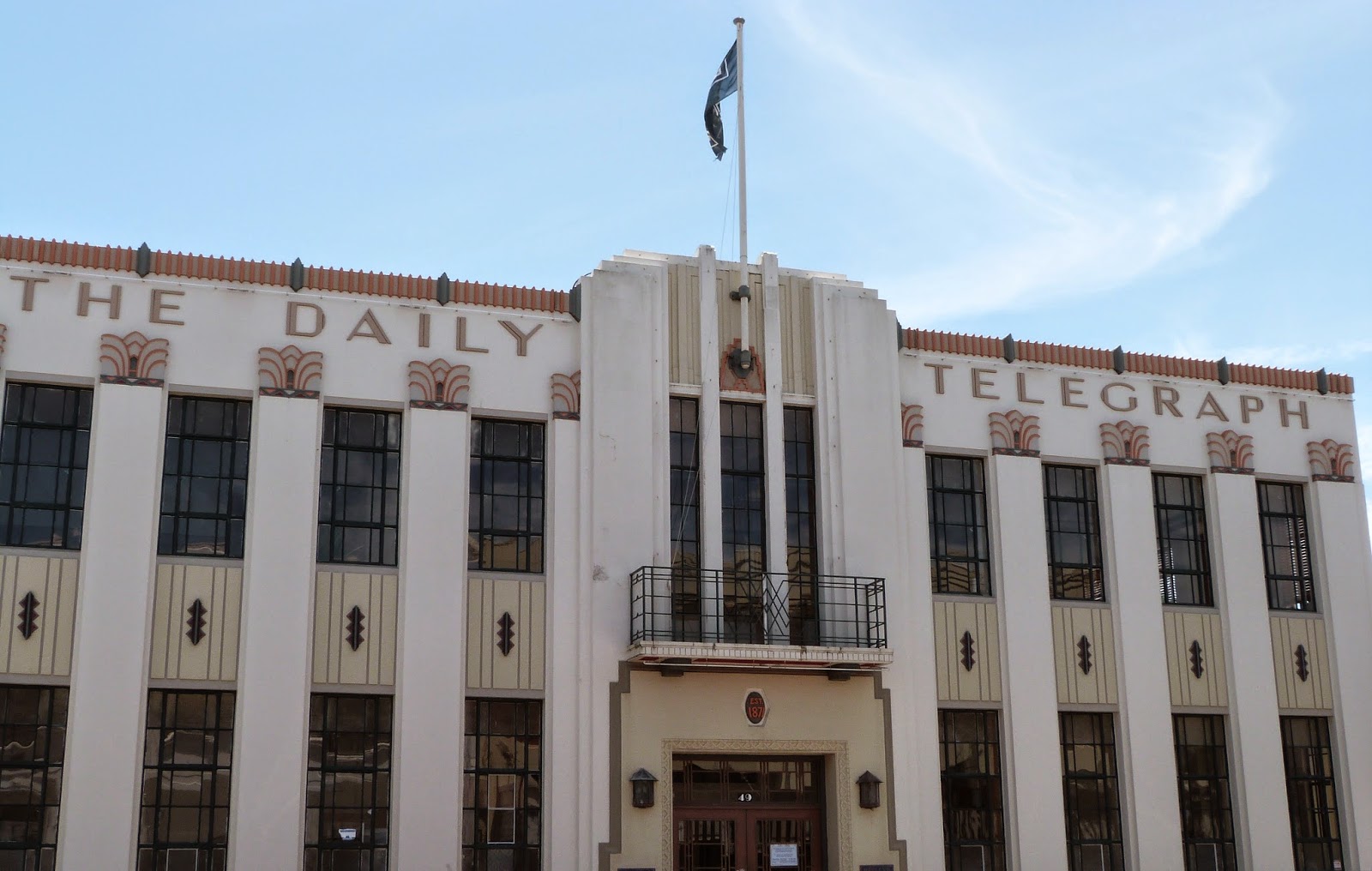
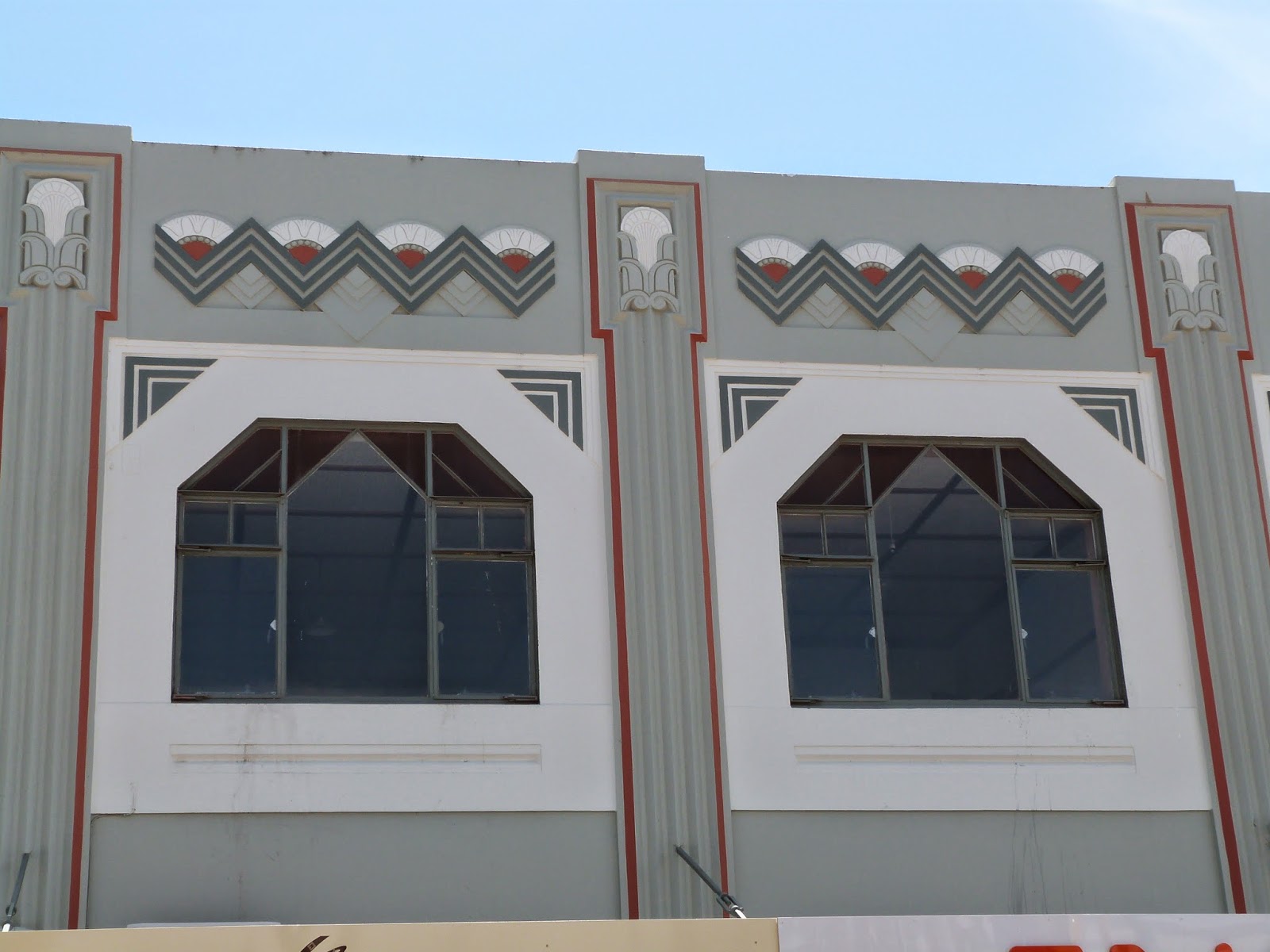
After the rigorous activity of yesterday (floating down an underground stream wasn’t that demanding, but getting in and out of those wetsuits was hard work!) we decided to take a break and go and visit Napier. We last visited it in Easter 2011, so it was about due for a re-visit. Lisa in particular wanted to look at the Art Deco buildings.

On the way, we saw a sign that said Scenic Lookout. “Got to be worth a look”, I thought, so we swung off the road and up a little track to a turning place up a hill. “Looks pretty ordinary” I thought, until Nicola beckoned us over to where she could see…this:


After taking pictures, we carried on our journey, discussing why the sign didn’t give more information, or indeed why it didn’t appear to marked on our map. It's the Waipunga Falls, apaprently.

We arrived in Napier and found somewhere to park pretty quickly, then walked a short distance into the CBD to find a café. We quickly settled on 2 Fat Lattes and got some refreshments there. At this point, there was some disagreement about what to do next. Ian had found a guitar shop and was happy to stay there. Three of the girls were uninterested in architecture, so went off to do whatever it is teenage girls do to occupy their time. Having already investigated the train tour (at $50 a pop we thought it was too expensive for a guided tour) we bought a self-guided tour and myself, Nicola, Lisa and Eli went off for a walk around the Art Deco buildings. I pointed out interesting features such as I could remember from when we had a walking tour here last time. We’d arranged to meet up back at the i-Site, then after a quick visit to the Cigarette Factory, set about searching out some lunch in the newer development over in the West Docks. We settled on The Thirsty Whale and had a rest and some lunch there.


How time flies when you’re having fun! The drive had taken longer than anticipated so we decided to crack on and make a start at heading back to Taupo so that we wouldn’t be late back to the bach. We also wanted to stop off in town to try to acquire a new pair of shorts as mine had suffered a catastrophic split and were in urgent need of replacements. The girls also wanted to go in search of knacks, and I dare say knicks (and visit McDonald’s). My shorts search having proved unsuccessful, Ian and I repaired to The Crafty Trout Brewing Company, Taupo’s own craft brewery and pub, and decided that it would be rude not to try their beer. As we sat down the clouds opened, and there was a flash and rumble of thunder, so we ended up staying there slightly longer than we intended. Once the rain had slackened off a bit we ventured outside and met up back at the car, and drove home. 

Saturday, January 3, 2015

Waitomo Caves

It’s Sunday, and Sunday means Black Water Rafting. This sounds a lot like white water rafting…but in the dark! How crazy is that? Actually, it’s nothing like white water rafting, and involves nothing more strenuous than gently bobbing through a cave in an inner tube. Phew!

On the way we stopped to see a tree. This is the largest totara tree in New Zealand, and therefore the world and, presumably, the universe (I'm prepared to believe there are larger ones in the multiple dimensions of the multiverse). This involved a short walk into the forest, until we reached a tree, surrounded by a fence, with a sign giving its dimensions. It looks like this:


The joy of this particular rafting experience is the glow-worms that live in the cave through which one “rafts” – especially when you turn out your helmet light to be in almost complete darkness.

We drove out early-ish to try and reach the caves in time for the 1:30pm tour that we’d booked with the Legendary Black Water Rafting Company. We’d packed a lunch, which helped with the speed as we only had around 15 minutes to spare, and needed to sign medical disclaimers before they’d let us continue. After that, it was the usual procedure of being given the safety talk, told what equipment and clothing we would be wearing, and getting us into said clothing, including some rather fetching white wellies for the ladies (Ian and I had rather more manly black boots). We then drove out to the start, and were issued with an inner tube commensurate to our size, to ensure that you’re not unstable when floating downstream. The final check was to practice our backwards jumping technique, as this is the way in which you enter the stream and leap over the waterfalls. This was done in the river in the light, so that we knew what we were doing when we came to do it in the dark.


We also practised the “river eel” position (feet up under the oxters of the person in front) so that we could do this when instructed by our guides.


A final walk down to the opening of the cave, where we posed for photos before going underground.

The water level was higher than last time when Nicola and I did this, which was at the end of a long dry summer. We didn’t have too much walking to do, but the guides did tell us that if we came in winter or spring then the water levels would be even higher. We’ll just have to come back again.

Down underground, we floated along, helping ourselves with hands on the walls or paddling to propel us, although there is a bit of a current as well. Along the way we learned about the formation of the caves, the glow-worms. (I switched off at this point, as there’s only so many times I can hear about the life cycle of the glow-worm, and that limit has been reached. Fortunately they kept it brief.) We also met Eric, one of the two resident eels in the river, but no cave wetas.


Towards the end, we were set free to find our own way out in the dark. This we achieved (frankly it would be difficult not to) and we emerged, blinking, into the sunshine.


On the bus on the way back, the guides said, “Hey that wasn’t bad for two guys on their first day!” Oh, how we laughed.

After a quick shower, we then had bagels and tomato soup to warm up, and then headed back to the bach for dinner – chicken and couscous this time, ably abetted by Ian on the barbie.

Friday, January 2, 2015

Great Lake Taupo

We took it leisurely on the drive up to Taupo, stopping off at The Mothered Goose in Bulls for some lunch. As we continued on past the three volcanoes in the Tongariro National Park (Tongariro, Ruapehu and the other one - Ngauruhoe) we realised that car two of our convoy didn’t have the address of where we were going, and we had in fact lost them some way back in the traffic. No problem, I thought…we’ll just text them, so we sent a text. We didn’t get a reply, so we tried calling…no signal. Bum. We’d planned to stop at Turangi for coffee and tea, before continuing on. Still no mobile reception, so we ploughed on nonetheless, and later passed them just outside Taupo, in a carpark by the side of the road. We quickly pulled over and exchanged information and checked the directions, before carrying on. We found the road with no problem, but hit a bit of a hitch finding the actual bach. The first place we came to looked like it, but the key wouldn’t work. We drove further down the road to another house, but that wasn’t it either. We then turned back to another place where we’d spotted some people in, and asked them…yes, it was the first house we’d reached. I tried the key again, and with a bit of jiggery, and not a small amount of pokery, we managed to get it to turn in the lock and let us in.

We explored the house, introduced ourselves to the two cats who call this place home (“are you the new staff?” one of them asked), assigned bedrooms, and looked around the grounds. There is a pergola and hammock, and various seating options around the outside, on the deck. We’d stocked up on a few items when we stopped at Bulls, so started cooking up a storm on the barbie, and had steak, salad and chips for dinner. 

The next day, we drove into Taupo for breakfast at The Waterside Inn, who served us up a great breakfast including smoked salmon stacks, hot cakes with bacon and maple syrup, and eggs and bacon. Lisa took the only healthy option of fruit and yoghurt. After brekkie, I left them to explore Taupo town whilst I went to Countdown to collect our groceries that I’d ordered earlier. As I arrived back home, I found that one of the cats had left us a welcome present outside the front door – a dead thrush. I said “you caught it, you eat it” but he didn’t seem to be terribly interested in that idea, so I cleared it away and put the groceries in the fridge and larder. Having met up with the rest of the gang back in Taupo, we drove out firstly to Huka Falls, there to admire the rushing water, before setting out on a longer trek out to Orakei Korako, the geological park outside Taupo, where we went and explored geology.


Last time we came to Orakei Korako was at the end of a particularly dry summer, and the mud pools had sunk to a level so low that we couldn’t see the mud, only hear it bubbling away far below us. This time, it was much fuller, and the mud was bubbling away, looking like extremely thick soup.


On the way back we stopped at L’Arte Café – reputedly one of Lonely Planet’s top 10 dining experiences in New Zealand. But then, they are mostly for backpackers. Still, they could make a decent cup of tea and chocolate brownie. The café is surrounded by a sculpture walkway, all the efforts of the in-house sculptress, Judi Brennan.


Thursday, January 1, 2015

Christmas

It’s Christmas! And this year, instead of going away for the hols, we are instead entertaining Nicola’s sister, Lisa, and her family, at our place and in Taupo.

We met them off the Interislander ferry on the 23rd. On Christmas eve we went to Scorch-o-rama in Scorching Bay, for an alfresco breakfast, before taking a tour of the Weta Workshop in Miramar.  Weta are the main special effects contractors for Stone Street Studios, Peter Jackson’s company that has made the Lord Of The Rings and Hobbit trilogies, as well as working on other films such as Avatar and District 9.

We assembled outside at the designated time and sat amongst the trolls before being taken into the studios. No photography is allowed inside the studio. Inside, we were given a guided tour by one of the artists there, a painter by the name of Mark. He gave us some brief biographical details (previous career included illegal uncommissioned public works of art, he told us), then explained some aspects of the special effects used in films. This would either give us an insight and appreciation of the work that goes into making a film, or completely ruin the films for us. Finding out that all the weapons used are made of lightweight foam rubber and plastic, for example, should come as no surprise. As was Sauron’s armour. He also gave us hints for dying as an extra in the movies – fall down in a comfortable position, as you may need to fall down and stay down for some time. Then do the same thing over and over again.


 Then we headed through Wellington and up to Karori, to visit Zealandia. It was a lovely sunny day, and we got there in time to join one of the guided tours, so Jim and his trainee tour guide, Jess, took us around the reserve, dealing words of wisdom (let it be) and answering our questions. We took in the Discovery Centre, where hihi and bellbirds were both feeding, and heard, but were unable to photograph (again), the elusive saddleback. We walked across the top dam and suspension bridge before going down to the tuatara enclosure, where a good half-dozen animals were out in the sunshine.


 After two days of glorious sunshine, Christmas Day dawned cloudy. Still, all were determined to go swimming in Scorching Bay so after lunch we went for a walk over the crest of the hill to the beach, and after some trepidation and and a bit of shivering, in they all went.


We all had an early night after that, as the next day we had to rise early and set off for our holiday bach in Acacia Bay, near Taupo.


Sunday, December 29, 2013

Stewart Island


It was the day after Boxing Day in Dunedin, and it was raining. We set off early, as we had to get ourselves down to Bluff, south of Invercargill, in time to catch a ferry to Stewart Island at 11:00. Stewart Island is the third, and smallest, of New Zealand's three main islands (the "triple star" of the national anthem). It has one town of 420 people, Oban. Most of the island is made up of the Rakiura National Park, which is popular with trampers.

The crossing was a bit choppy as there was an unseasonal easterly wind blowing through the Foveaux Strait. We saw several albatross on the way as well as various petrels and shearwaters. The ferry crossing takes about an hour, and I was feeling a bit queasy by the time we made it into Halfmoon Bay. I soon recovered though, and we popped into New Zealand's most southerly pub, the South Sea Hotel, for a bite of lunch.


After that we went on a tour of the island by minibus, which we'd booked earlier. As it turned out, we were the only people to have booked this, so we had a personal guided tour from Kylie, a resident of the island. She gave us a lot of information, some of which was not standard text-book stuff - like how to age a rimu without drilling into it (arms are involved); and some insights into water management (make do with what falls out of the sky, because there is no other source), and the economics of island life.

After another stomach-churning voyage back to Bluff, we made it to Invercargill in late afternoon, in warm, glorious sunshine! You know, that stuff that summers are supposed to contain! In typical fashion, tomorrow will be warm and glorious, but we're flying back up to the rainy North Island for more, er, rain. But not before we drive the scenic route back to Dunedin in hopefully good weather.

Saturday, December 28, 2013

Otago Peninsula


Boxing day was...you guessed it, wet and rainy. First stop was a whistlestop tour of the Otago Museum (which is different to the Otago Settlers Museum), which contains scale models of many of the ships which were an important part of the development of the city of Dunedin, as well as the skeleton of a not-quite-full-grown fin whale.

Then we drove out to the Otago Peninsular once again, this time to visit the Royal Albatross Centre. We'd booked a tour at 12:00, which consisted of a bit of talk from the guide to begin with, answering such important questions as "are the albatrosses royal, or is the centre royal?" to which the answer is "the albatrosses, duh!" The centre is there because Southern Royal Albatrosses (see?) have their only mainland nesting colony there. We then watched a short film about albatrosses and other animals before trooping up to the viewing centre. The area where the albatrosses nest is fenced off from the public, and from ground predators. It's currently the nesting season, so one of the pair sits on the nest whilst the other goes off to sea to feed...for up to 10 days at a time. When he or she comes back, they change position, and the starving one disappears off for an extended squid binge.


We were fortunate to also see two albatrosses circling, either attempting to land to swap over, or, more likely, younger birds showing off to try to attract a mate.


After a quick lunch at the centre's cafe, we then drove down to Weller's Rock to take a marine tour with Monarch on the MV Monarch. We had barely left the mooring when we saw a little blue penguin, New Zealand's, and indeed the world's, smallest penguin:


We then headed round the rocks to see New Zealand fur seals lounging on the rocks, a white-fronted tern, and loads of albatrosses of various kinds (there are 11 different species which hunt around here, but only the Southern royal albatrosses breed here).


We also saw spoonbills, godwits, stilts and oystercatchers but at distances too great to photograph successfully. We didn't see any whales or dolphins, but these are less common round here.


Wednesday, December 25, 2013

Larnach Castle

Christmas day dawned wet and cloudy. After breakfast we drove out to Otago Peninsula, to investigate the wildlife and go to New Zealand's only castle, Larnach Castle. The wildlife was staying resolutely away, so we resolved to go on a boat tour tomorrow instead, and headed to the castle. The rain was lessening by then, which was helpful.

Larnach Castle was built by William Larnach between 1871 and 1876. After much changing of hands in the 20th century, and having fallen into disrepair, it was bought by the current owners in 1967. It has been restored to its former glory by purchasing appropriate, and in some cases the original, furniture, for the public rooms.


We toured the castle from the bottom up, including the turret at the top, where you can see out to the Otago peninsula and beyond. Attached to the castle at the side is a ballroom built as an addition to the castle by William Larnach as a gift for his daughter's 21st birthday. Unfortunately we hadn't brought our dancing shoes, so were unable to take a turn around the dance floor. This was probably just as well, as most of it was taken up by tables for the cafe.


Tuesday, December 24, 2013

Dunedin


We set off from Wellington airport for for the southern sun in Dunedin. Wellington airport have recently added to their Gollum sculpture with two giant eagles in the departure lounge:


When we arrived in Dunedin it was chilly and windy. We'd had a bit of a mishap on the car hire front, so spent the next half hour finding a new car, before setting off into the unknown of Dunedin, navigating by nothing more than a vague idea of where we were going, and street signs. Amazingly, we found our destination with very little trouble, settled ourselves in and went out for dinner at our pre-booked choice of restaurant, No. 7 Balmac.

After consulting the map provided at Reception, we decided to walk to the restaurant. Unfortunately, the map seriously foreshortened distances outside the central area, so we ended up walking for about half an hour before we reached it. When we got there, however, all was well, and we had a good dinner there before ordering a taxi to take us home.

The next morning dawned wet and miserable, as predicted by the weather forecasters. The whole of Christmas is being dominated by a low from across the Tasman, and it doesn't look like anywhere is going to enjoy good weather for the next few days. Undeterred, we nipped out for breakfast at the Everyday Gourmet, before heading into the centre of town to the i-site, and there booked ourselves onto the Taieri Gorge railway for the afternoon excursion. We then had a few hours to kill before leaving at 2:30, so we headed into the Otago Settler's Museum, which tells the history of the area. Originally a whaling and sealing town, known derogatorily as Mud-edin, it was transformed by the Central Otago gold rush of 1861, when it became New Zealand's largest city (it's now 5th largest, having recently been overtaken by Hamilton). Amongst many exhibits of New Zealand life, it included a roomful of pictures of old, dead people:


After a spot of lunch at Velvet Burger, we headed to Dunedin station to get on the train. Dunedin station is well-known (in New Zealand) for its architecture.


We boarded the Taieri Gorge train, and headed off uphill through the suburbs of Dunedin before reaching the part of the railway which is privately-owned, which goes up from Wingatui to Pukerangi; stopping along the way to allow us to take pictures of the picturesqueness of the Taieri Gorge. The railway goes over some spectacular viaducts:


Along the way we were provided with commentary about what we were seeing, and general hints and tips like "don't lean outside the viewing platforms when going through tunnels, as the walls are only a couple of inches wider than the trains".


The views on the way are more interesting than what's at the end of the line, so we took some more pictures on the way back down.


It was all very spectacular and full of geology and stuff. You can see more of this on Facebook when I get back to Wellington.

We got back at around 6:30, and then went out to Carey's Bay, to the Carey's Bay Historic Hotel for dinner. This has a reputation as being a great place for seafood, so we ordered...seafood. The view was less than spectacular, as it consisted of the container port opposite - this is strangely absent from their website. The food was good, though. We had a seafood platter, poisson cru, teriyaki gurnard and Thai red curry fish.

On the way back, the skies opened again, and there was a terrific downpour...although the sun was also shining, and a rainbow showing, whilst there was also a rumble or two of thunder. 

Tomorrow's forecast is for more rain.